
Should vs. Could
Last week we touched on a few benefits of using Medius for your agricultural trial data management and analytics needs. As you might recall, the underlying premise was that technology is evolving so rapidly that keeping up with the changes is a full-time job and may not be your best use of time when it is not your core mission. It brings to mind the quote from Jeff Goldblum’s character in the 1993 classic film Jurassic Park:
In our previous post, we also briefly discussed the cost associated with building a customized, in-house software solution and the requisite maintenance. Today, we’re going to spend a few more minutes diving into a bit more of the details, challenges, and costs of building and maintaining your own database.
At the outset, it is critical to understand that building and maintaining a database is not a casual exercise or commitment. If you’re going to invest the time and energy to build a system, current and future organizational data needs must be taken into consideration. A well-structured database serves as the cornerstone of efficient data management, offering a systematic and organized approach to storing, retrieving, and managing information. The importance lies in its ability to provide a logical framework that ensures data accuracy, integrity, and accessibility. A meticulously designed database facilitates seamless query execution, allowing for quick and reliable retrieval of relevant information. Furthermore, it establishes relationships between different data entities, promoting a coherent and interconnected data model. A robust database structure not only enhances the overall performance of applications and systems but also simplifies the process of adapting to evolving organizational requirements. In essence, the importance of a well-structured database goes far beyond mere data storage; it lays the foundation for streamlined operations, informed decision-making, and scalability, thereby contributing significantly to the overall success of an organization. In other words, it is foundational and not to be taken lightly.
To achieve the purposes outlined above, building a database requires planning, design, and implementation. Each aspect incurs a cost that must be taken into account. Of course, it is important to recognize that not all databases are created equal. The resources required for a database that delivers real-world benefits to your enterprise can vary dramatically based upon the size, scope, and complexity of your data set(s) and organizational needs. As we go through the following cost estimation exercise, it is important to remember this. With that in mind, let’s start with planning.

Planning and Preparation are essential to a successful database development project and, consequently, require expertise. You’ll need some combination of database analysis and project management to execute this initial development phase. According to Indeed, which claims to be the “#1 job site in the world,” the average database developer salary in the United States is around $102,500, without benefits, as of February 2024. For a database developer with sufficient project management experience, you could easily surpass the average salary noted above. Additionally, there may be costs associated with hiring external consultants for specialized advice, with hourly rates varying between $100 and $200. Capital investment during the planning phase includes tools and software for efficient requirement gathering and analysis, such as project management software, collaboration tools, and data modeling software. These tools can collectively cost between $5,000 and $15,000. Moreover, organizations may incur consultant fees for strategic guidance, ranging from $5,000 to $20,000.
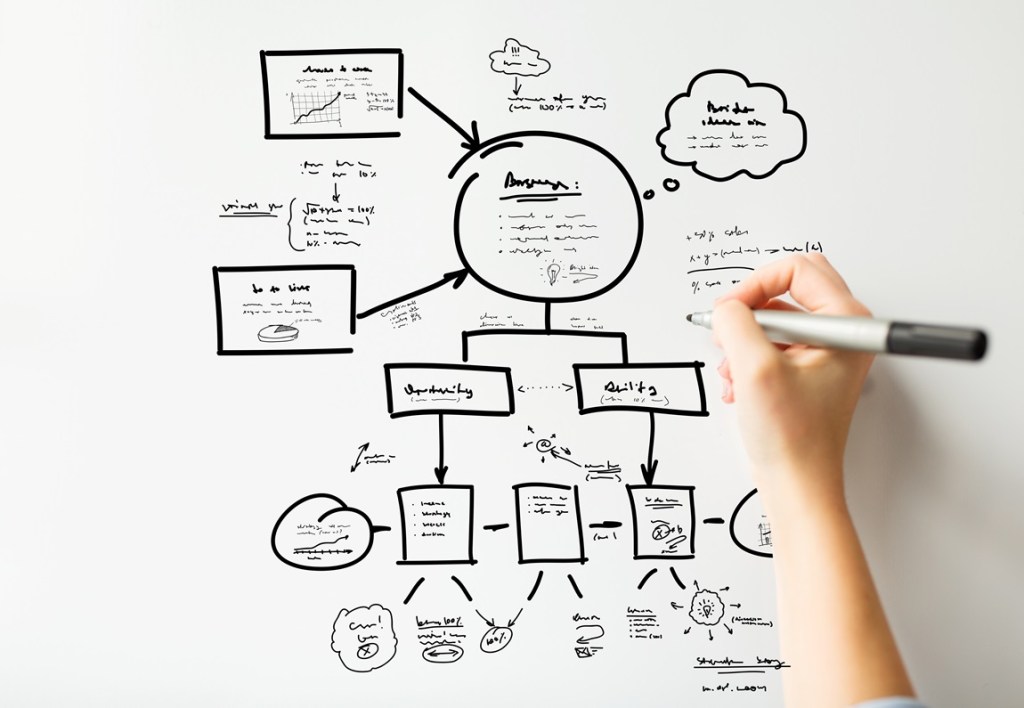
Database Design is crucial for ensuring data accuracy, integrity, and efficiency. This aspect includes the salaries of database designers responsible for creating entity-relationship diagrams (ERD), normalizing the data, and defining the database schema. In addition to our database developer referenced in the previous section, compensation for experts specializing in normalization and ERD design may incur hourly rates between $80 and $150. Capital investment in this phase involves the acquisition of software tools specifically designed for database design. The cost of these tools can range from $2,000 to $10,000. Depending on your budget, you could choose to hire a database designer to assist in some of the database development labor, but that would run you an average of about $96,650 without benefits, according to February 2024 estimates from Glassdoor.

Now that we have adequately planned and designed our database, it is time to make it a reality. As before, labor costs make up the lion’s share of the costs and consist of the salaries of database administrators responsible for creating tables, establishing relationships, and overseeing the overall Implementation. Database administrator salaries typically range from $80,000 to $120,000 per year, with US News pegging the median just under $100,000 in 2022. Possible investments in this phase include licensing fees for the chosen Database Management System (DBMS), with costs ranging from $10,000 to $50,000 depending on the type and scale of the system. There may also be hardware requirements for the installation of the DBMS, with potential costs ranging from $5,000 to $20,000. Tools and software for testing and quality assurance purposes can contribute an additional $5,000 to $15,000 to the capital investment. Even without some of these additional costs, it is absolutely critical to understand that database administration is an ongoing, annual labor cost that must be accounted for.
Just like a house or a car, a database must be maintained. Not only do we need to regularly back up our data, but we also need to protect our database against cybersecurity threats, stay current with technology, maintain its good performance, and ensure that new data follows established protocols as it is added to the existing database. Beneath all of this is the non-stop effort to clean and optimize the data in the context of requisite technological changes and updates.

Regular Backups are critical for safeguarding the integrity and availability of data. The procurement of backup storage solutions, with costs varying based on the required storage capacity and redundancy measures, must be considered. External hard drives, cloud storage subscriptions, or dedicated backup servers can range from $1,000 to $10,000 annually. Additionally, offsite storage considerations for disaster recovery planning may incur additional costs, ranging from $5,000 to $20,000 per year.
Database Security protects sensitive information and ensures secure data access. One significant investment here is the implementation of robust user access control and permissions systems, which may involve purchasing or upgrading security software. The costs for such software solutions range from $5,000 to $20,000, depending on the features and scalability. Encryption tools for safeguarding sensitive data may contribute an additional $2,000 to $10,000 in expenses. Regular security audits and updates, crucial for identifying and addressing vulnerabilities, may require the acquisition of security assessment tools, incurring costs ranging from $3,000 to $15,000.
Performance Monitoring helps maintain optimal database functionality and identify areas for improvement. The necessary monitoring tools and software designed to track query performance and identify potential bottlenecks range from $5,000 to $25,000, depending on the complexity and scalability of the database system. Investing in scalable hardware for performance testing and monitoring may contribute additional costs, ranging from $3,000 to $15,000, depending on the organization’s requirements.
Data Cleaning and Optimization tools typically range from $2,000 to $10,000, depending on the complexity of the database and the extent of data cleaning required. Investing in optimization tools for query and index performance can run an additional $3,000 to $15,000. Overall, the costs associated with data cleaning and optimization can range from $5,000 to $25,000 per year. These investments are essential for ensuring that the database operates at peak efficiency, with clean and well-optimized data facilitating improved query performance and overall system responsiveness.
Software Updates are crucial for keeping the database current, secure, and compatible with evolving technologies. Ongoing licensing fees typically range from $10,000 to $50,000, depending on the scale and type of the system. Testing and implementing updates may require additional software tools, contributing costs ranging from $3,000 to $15,000. Addressing compatibility issues, such as adapting existing applications to the updated DBMS, may incur further expenses, ranging from $5,000 to $20,000.
We will readily concede that there will likely be some overlap in the various aspects of building and maintaining a database. Be that as it may, the reality is that the work of constructing and maintaining a database is a substantial undertaking requiring substantial investments of time and money. A database, or data management system, is never “complete” and must always be able to evolve and adapt to changes in technology, emerging cybersecurity threats, shifting user needs or preferences, and administrative policies, for example. By any conservative measure, annual costs to maintain a database at a professional level will be in the six figures when labor costs are included. Initial set up costs will also exceed annual maintenance costs, meaning that a large capital investment will be necessary at the beginning of the project.
Although in some cases it will make sense to pursue an in-house database solution, we encourage you to explore that option with eyes wide open. In addition to cost, complexity must also be taken into account. Remember that a proposed database will frequently run into setbacks when theory and reality butt heads. With Medius, however, that database framework already exists and can be put in place efficiently and affordably with guaranteed, customized results. Too often we see or hear of proposals for in-house solutions that promise to deliver a final product that will cost less and deliver more than we do. While created with the best of intentions, after substantial investments of time and money, unfortunately they prove inadequate and nothing more than a mirage.
There is a better way and we would like to prove it to you.
If you are interested in seeing how Medius can make your data more useful and powerful, send us a note at info@mediusag.com. Or, simply reach out to us on one of our social media channels or give us a follow. You can find us on Facebook, Twitter, LinkedIn, and Instagram.